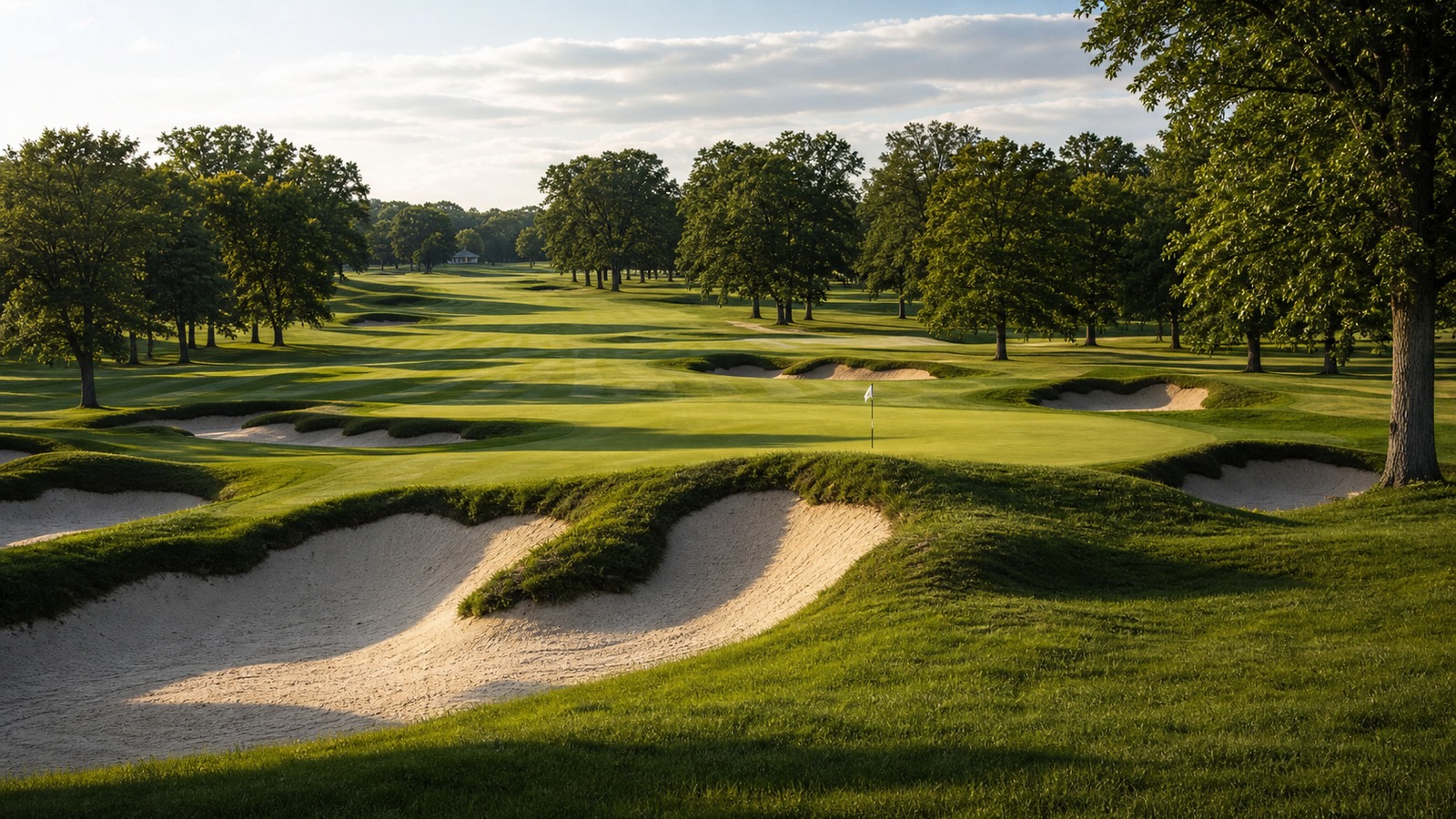
Augusta National Golf Club occupies a rare place in golf. Even fans who have never walked its hills can picture the sweep of the fairways, the flashes of white sand, the spring color of the azaleas, and the tense quiet that settles over the back nine during the Masters Tournament. The club is private, its traditions are carefully guarded, and its tournament appears on the calendar only once each year. Yet Augusta National feels familiar because generations of memorable shots have turned its holes into landmarks. A complete guide needs to go beyond postcard beauty. The course rewards players who understand angles, uneven lies, speed, and the emotional pressure of choosing the correct target when a safer route is visible. It also has a layered history shaped by Bobby Jones, Alister MacKenzie, changing equipment, and thoughtful redesign. For golf fans, learning Augusta National is a way to watch the Masters with sharper eyes and to understand why this course continues to produce compelling drama without relying on spectacle alone.
A: No. Augusta National is a private club and public tee times are not offered.
A: The first Masters was played in 1934.
A: Bobby Jones and Alister MacKenzie shaped the original design.
A: It describes the approach into 11, the par-three 12th, and the tee shot on 13.
A: Broadcast angles often reduce the visual impact of the property’s elevation changes.
A: Speed, contour, firmness, and approach angle can turn a small miss into a demanding recovery.
A: Yes. The club’s former nursery property inspired botanical hole names.
A: Yes. That annual return is a defining feature of the tournament.
A: Watch approach angles, landing areas, recovery positions, and decisions on the par fives.
A: Review a hole map and learn the strategic questions on the closing nine.
Why Augusta National Holds a Distinct Place in Golf
Many courses host major championships, but Augusta National is inseparable from one major. The Masters has been played there since 1934, allowing viewers to build a long relationship with the same landscape. A fan can remember where a bold approach landed decades ago, then watch a current player face a similar decision from a new distance. That continuity gives the course a narrative quality. The holes do not simply appear on television; they accumulate memories.
The setting also creates a productive tension. Augusta National looks serene, but the most important shots are rarely comfortable. Fairways tilt. Greens reject weak approaches. Closely mown collection areas can turn a small miss into a delicate recovery. The course rewards imagination and control rather than one-dimensional power. Length matters, especially after modern changes, but it is only the admission ticket. Players still need to place the ball on the correct side of slopes and judge how quickly a seemingly safe putt can escape.
The Vision of Bobby Jones and Alister MacKenzie
Augusta National began with a partnership between Bobby Jones and architect Alister MacKenzie. Jones wanted a course that offered options to players of different abilities, while MacKenzie valued strategic golf that made each decision visible. Their collaboration produced broad corridors, inviting tee shots, and greens that sharpen the meaning of approach angles. The best line is not always the easiest line from the tee. A golfer who takes on risk may earn a clearer look, while a cautious choice can leave a more demanding second shot.
The property was formerly a nursery, which helps explain the botanical character that became part of the club’s identity. Hole names such as Magnolia, Camellia, and Azalea reinforce the connection between the course and its landscape. The beauty is not separate from the architecture. Color, elevation, and framing help viewers understand where the eye is drawn, even when television cannot fully communicate the severity of the slopes.
Reading the Course Beyond the Television Picture
Broadcast coverage can flatten Augusta National. On a screen, a green may appear accessible and a fairway may seem generous. In person, elevation changes alter club selection, stance, and confidence. The second shot at the 10th hole falls dramatically downhill. The climb toward the clubhouse late in the round is more demanding than it may appear. Even a well-struck approach can finish far from its landing point because the greens guide balls toward or away from pins.
That movement is central to Augusta National strategy. Players are not aiming only at a flag. They are often choosing a landing area that allows the ground to do part of the work. When conditions become firm, the ability to visualize the next bounce matters as much as raw carry distance. Fans who watch for trajectory, landing position, and the leave after a missed green will see a richer version of the competition.
Amen Corner and the Pressure of Three Famous Holes
The phrase Amen Corner refers to the approach into the 11th green, the par-three 12th, and the tee shot on the par-five 13th. This sequence is famous because the hazards change character quickly. The 11th asks for discipline around water guarding the left side of the green. The 12th appears short, but wind can be difficult to read among the trees. The 13th then tempts players with the possibility of reaching a par five in two shots after a committed drive around the bend.
These holes compress the emotional range of tournament golf. A contender may be protecting a score on 11, uncertain on 12, and attacking on 13 within a brief stretch. The challenge is not only technical. Players must reset after every result. A poor swing cannot be allowed to dictate the next decision, and an exciting opportunity cannot erase the need for a precise target.
The Back Nine Where Masters Sundays Turn
Augusta National’s closing stretch keeps offering chances while refusing to guarantee them. The 15th is a reachable par five for many competitors, but water short and behind the green makes distance control essential. The 16th is a par three where slopes can feed the ball toward certain hole locations, creating the possibility of a dramatic charge. The 17th asks for a composed approach after the energy of the preceding holes. The 18th climbs toward a green surrounded by bunkers and spectators, making the final approach feel both enclosed and exposed.
This is why a lead at Augusta can feel unstable. The course creates scoring opportunities, but each opportunity is paired with a decision that can produce a costly miss. Sunday drama is not an accident added by the tournament. It is built into a routing that asks players to alternate between restraint and ambition.
Signature Holes Worth Studying Closely
The 12th hole, Golden Bell, is the most recognizable short hole on the property. Rae’s Creek, a narrow green, bunkers, and uncertain wind make it more complicated than its yardage suggests. The correct club can change quickly. The 13th, Azalea, curves left and rewards a strong tee shot that follows the shape of the hole. The 15th, Firethorn, asks whether a player should challenge the water with a long approach or lay up to a preferred wedge distance.
The 16th, Redbud, is another fan favorite because the green’s contours can create movement that is visible to everyone watching. Earlier in the round, the par-five second hole provides an early chance to score, while the long 10th announces the more demanding character of the back nine. Studying these holes as a connected set is more useful than viewing them as isolated highlights.
How Course Changes Have Protected the Test
Augusta National has evolved. As players became stronger and equipment advanced, tees were moved, holes were lengthened, trees were added in selected areas, and strategic questions were adjusted. These changes generate debate because fans value the historical comparisons that make the Masters special. A longer hole can preserve the intended choice for modern players, but excessive emphasis on distance could also narrow the variety that defines the course.
The most interesting changes maintain a balance. Augusta should challenge elite golfers without becoming a simple test of survival. Its identity depends on players having opportunities to attack, recover, and think. When modifications protect the importance of placement and approach angles, the course continues to ask contemporary competitors versions of the questions that Jones and MacKenzie valued.
Traditions That Shape the Fan Experience
The Masters has a recognizable rhythm. The Champions Dinner brings past winners together before the tournament. The Par 3 Contest adds a lighter atmosphere during tournament week. The green jacket ceremony gives victory a visual symbol unlike any other major. Even the terminology feels distinct: spectators are commonly called patrons, and the course’s presentation avoids many of the commercial cues visible at other sporting events.
These traditions can seem formal, but they serve a practical purpose. They focus attention on the competition, the landscape, and the history of the event. For a first-time viewer, the best approach is to appreciate the customs while also watching how the course affects decisions. Tradition is not the only reason Augusta National matters. The architecture keeps earning attention shot by shot.
What Fans Should Watch During a Masters Broadcast
Start by noticing where players aim from the tee rather than judging only distance. A ball on the correct side of a fairway can open a safer approach. Then watch the flight of approach shots. A lower trajectory, a high soft landing, or a deliberate use of a slope may reveal what the player expects from the green. Around the putting surfaces, pay attention to misses that leave an uphill recovery. Those misses may be planned more intelligently than a shot that finishes closer but below a severe slope.
It also helps to follow a few players with contrasting styles. Compare a powerful driver, a precise iron player, and an inventive short-game specialist. Augusta National exposes strengths in different ways. A golfer may gain ground by overpowering a par five, saving par from a collection area, or lagging a difficult putt to tap-in range. The scorecard records the same number, but the path to it tells a different story.
Can Golf Fans Visit Augusta National?
Augusta National is a private club, so it is not a destination where the public can simply book a tee time. Tournament access is also limited. Masters ticket applications and practice-round opportunities are the main pathways for many fans, while hospitality and secondary-market considerations require careful research. Anyone planning a visit should rely on official information, understand the rules for the event, and prepare for walking on a hilly property.
Fans who cannot attend still have useful ways to deepen their experience. Study hole maps before tournament week. Rewatch key final rounds with attention to decisions rather than only outcomes. Compare how the course plays in different weather conditions. Augusta National rewards repeat viewing because familiar holes reveal new details when pin positions, firmness, wind, and leaderboard pressure change.
Building a Better Augusta National Viewing Plan
A useful viewing plan begins before the leaders reach the closing stretch. Watch early coverage to learn how the greens are reacting and whether approach shots are releasing beyond their landing spots. Note where putts repeatedly gather speed and where players choose to miss. As the afternoon develops, compare those observations with the decisions made by contenders. This turns the broadcast into more than a sequence of highlights. It becomes a study of adaptation. The player who recognizes the day’s patterns soonest may create opportunities without forcing shots that the conditions no longer support.
A Course That Rewards Informed Watching
Augusta National Golf Club is legendary because it combines continuity with uncertainty. The Masters returns to the same ground each spring, but the course never produces the same tournament twice. A slope that helped one player may punish another. A cautious choice may preserve a round or surrender an opportunity. A short par three can become the most consequential hole of the week.
For golf fans, the best way to appreciate Augusta National is to watch with curiosity. Look beyond the flowers and famous images. Notice the angle of a drive, the shape of an approach, the patience required after a miss, and the courage needed when a scoring chance appears. The course’s lasting power comes from the way beauty, strategy, memory, and pressure remain connected from the opening shot to the final climb toward the clubhouse.