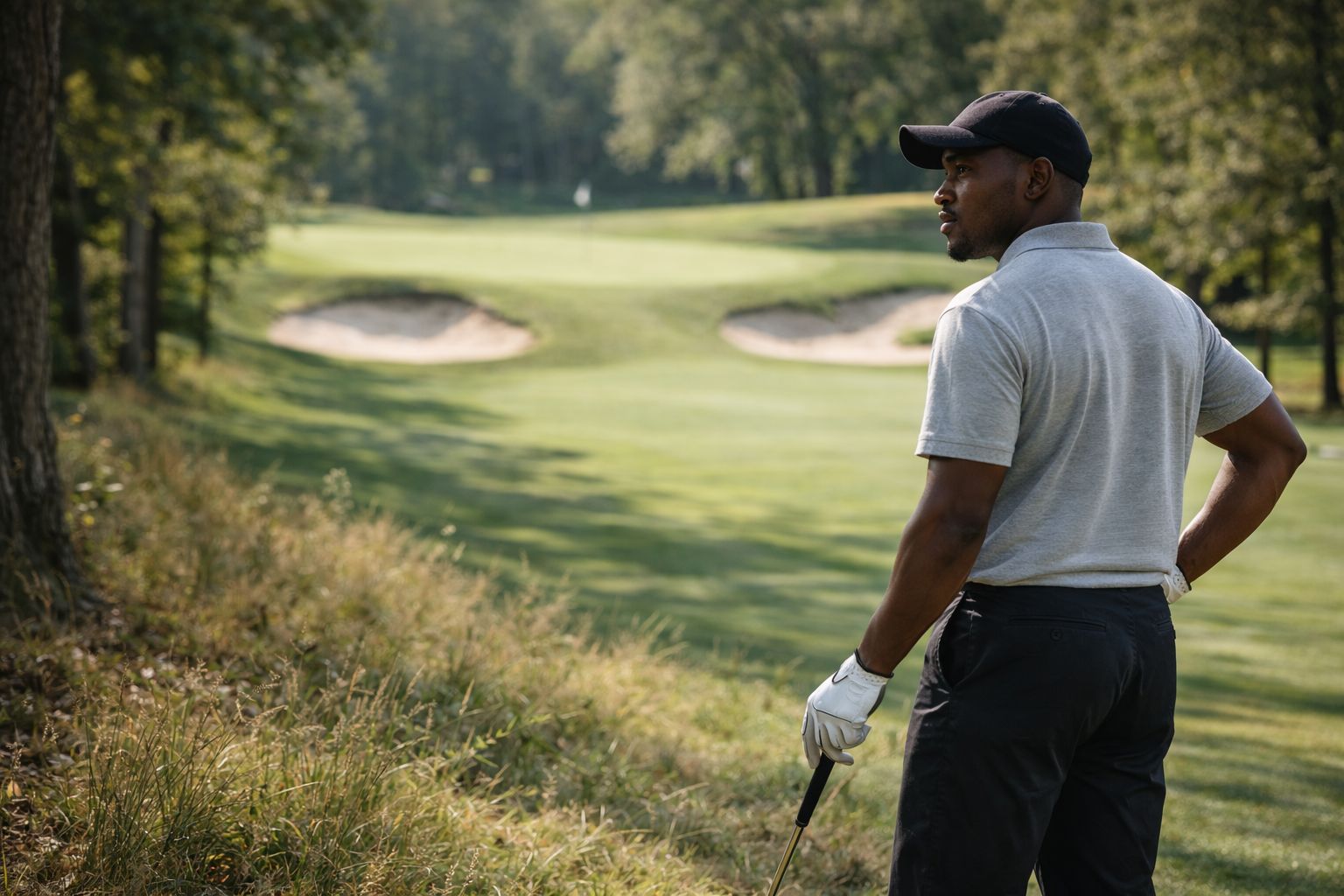
Thinking your way around a golf course is the quiet skill that turns good golfers into great scorers. Professionals don’t rely on perfect swings or heroic shots to post low numbers. They rely on clarity, discipline, and a constant awareness of where the next shot should come from. Every decision is intentional. Every target has a reason. This mindset transforms golf from a reactive sport into a strategic one, where mistakes are minimized and pressure is managed instead of feared. Learning to think like a pro doesn’t require elite athleticism. It requires learning how to see the course differently, how to plan shots before you ever pull a club, and how to stay emotionally neutral regardless of what just happened on the previous hole.
A: It means choosing targets and clubs that remove doubles first—then letting pars happen naturally.
A: Aim for the biggest safe section of green and make your miss leave plenty of green to work with.
A: No—hit the club that keeps penalty and trouble out of play. “In play” beats “in trouble.”
A: Get back to the fairway, then play to a yardage you like—avoid the hero second mistake.
A: Choose the club that eliminates the worst miss—often that means clubbing up and swinging smooth.
A: Long clubs = big targets. Short clubs = you can be more aggressive. Match risk to dispersion.
A: Lag to a 2–3 foot circle with speed control, then trust a repeatable short-putt routine.
A: When hazards, uneven lies, or low confidence make the “go” option risky—lay up to your best wedge number.
A: Short-siding greens and chasing pins from trouble—both turn bogeys into doubles fast.
A: Use a simple default plan: safe off tee, center-green approaches, boring chips, and two-putt mindset.
Seeing the Golf Course as a Series of Decisions
Professional golfers don’t see a hole as one long challenge from tee to green. They see it as a sequence of manageable decisions. Each shot sets up the next, and the goal is always to make the following shot easier rather than harder. Instead of asking how to reach the green as fast as possible, pros ask where the ball needs to be positioned to allow for the highest percentage next shot. This shift in thinking immediately lowers stress and increases consistency. Fairways look wider. Greens feel more accessible. When you start breaking holes into segments, you gain control over situations that once felt overwhelming.
Playing the Percentages, Not the Pin
One of the biggest differences between amateur and professional thinking is target selection. Pros rarely aim directly at the flag unless the situation clearly favors it. They aim at safe zones that allow the ball to finish near the hole without bringing major trouble into play. They understand that birdies come from opportunities, not force. By aiming for the center or safest portion of the green, they dramatically reduce short-sided misses and avoid difficult recoveries.
Over time, this approach leads to more greens hit, more stress-free pars, and enough birdie chances to build momentum. Thinking in percentages rather than perfection keeps scores low even when ball striking isn’t perfect.
Choosing Clubs With the Next Shot in Mind
Professionals choose clubs based on outcomes, not ego. Distance is only valuable when it improves positioning. On many holes, a shorter club off the tee produces a better scoring chance because it leaves a preferred yardage or avoids a hazard that brings big numbers into play. On approach shots, pros often take extra club to ensure solid contact and predictable flight. Smooth swings produce repeatable results, and repeatable results produce confidence. When you start choosing clubs that match your comfort zones rather than your maximum distance, the game slows down and decision-making becomes easier.
Using Your Natural Shot Shape as a Strategic Tool
Every golfer has a natural shot shape, and professionals build their strategy around it. They don’t fight their tendencies unless absolutely necessary. If a player naturally fades the ball, they choose targets that allow that fade to work toward the center of the fairway or green. This thinking removes tension and reduces the need for last-second swing adjustments. When your strategy aligns with your natural tendencies, your swing feels freer and more reliable. The course begins to work with you instead of against you, and confidence builds with every committed swing.
Managing Mistakes Without Letting Them Multiply
Even the best players in the world miss fairways, greens, and putts. What separates them is how they respond. Professionals accept mistakes quickly and immediately shift into damage-control mode. Instead of chasing miracle recoveries, they prioritize getting the ball back into play and setting up the easiest next shot possible. This mindset keeps bogeys from turning into doubles and preserves momentum throughout the round. Thinking like a pro means understanding that patience is a scoring weapon. Accepting small setbacks prevents emotional decisions that lead to big numbers.
Thinking Backward From the Green
One of the most powerful course management habits is planning holes backward. Professionals often visualize the ideal approach shot first, then work back to determine where the tee shot or layup should finish. This thinking ensures that approach angles, yardages, and slopes are all favorable. By deciding where you want to hit your approach from, you eliminate guesswork and reduce pressure over the ball. This backward planning creates clarity and purpose, making each swing feel connected to a larger plan rather than isolated and reactive.
Great course management is impossible without emotional control. Professionals maintain steady reactions regardless of outcomes, which allows them to make rational decisions under pressure. They don’t let excitement after a birdie lead to reckless choices, and they don’t let frustration after a mistake dictate strategy. This emotional neutrality keeps the mind clear and focused on execution rather than outcome. When you learn to detach from individual shots and focus on long-term scoring, pressure situations become opportunities rather than obstacles.
Turning Strategic Thinking Into Consistent Low Scores
Thinking your way around a golf course like a pro is about building habits that repeat round after round. It’s about making decisions that favor consistency, trusting strategy over impulse, and understanding that golf rewards patience more than aggression. When you commit to smarter targets, better club choices, and calm responses to adversity, your scores begin to reflect that discipline. Over time, this mental framework not only lowers scores but also makes the game more enjoyable. You stop fighting the course and start navigating it with confidence, intention, and control, which is exactly how professionals think their way to the top of the leaderboard.