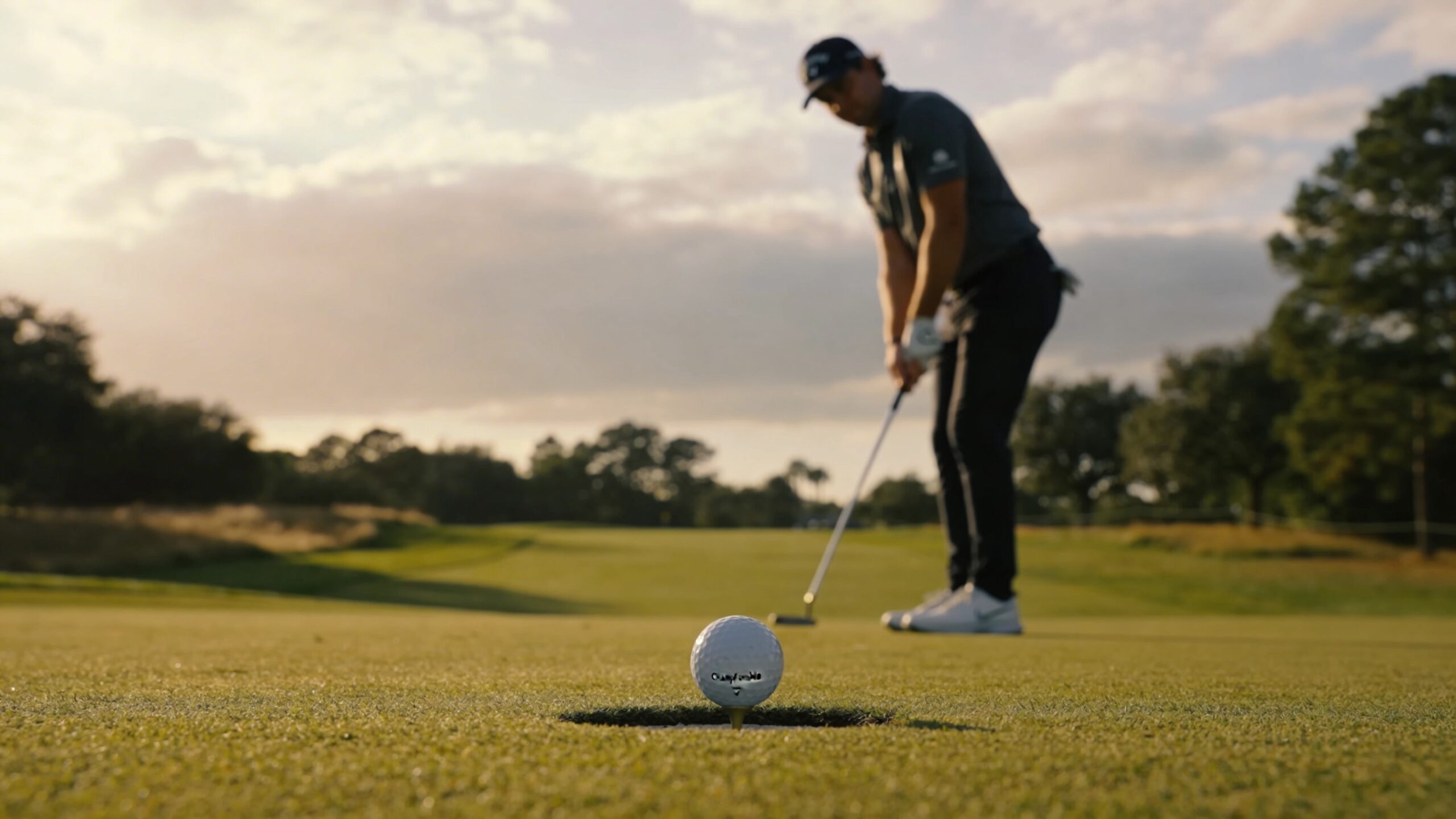
On the practice range at sunrise, before galleries gather and scoreboards light up, the world’s best golfers are already competing. Not with opponents, but with imagination. Long before the club moves, the shot has already been played in their minds. This is the hidden edge of elite performance: visualization. For tour professionals, golf visualization techniques are not motivational fluff or vague positive thinking. They are structured, repeatable mental skills that shape ball flight, calm nerves, and turn pressure into precision. Visualization in golf is the art and science of mentally rehearsing a shot in vivid detail before executing it. It involves seeing the trajectory, feeling the swing, hearing the strike, and even sensing the wind against the skin. Neuroscience supports what tour players have known for decades: the brain activates many of the same neural pathways during vivid mental rehearsal as it does during physical performance. When used correctly, visualization strengthens motor patterns, increases confidence, and reduces anxiety. In a game where margins are razor thin and pressure is relentless, mastering the mind is often what separates good from great. Understanding how professionals use golf visualization techniques can transform the way you approach every tee box, approach shot, and putt.
A: Yes—keep it short. A quick picture builds commitment without slowing play.
A: Use feel and sound—imagine tempo, impact sound, and a smooth finish pose.
A: Usually the outcome first. Mechanics are typically handled in practice, not during competition.
A: Acknowledge the danger, pick the safe target, then replace the hazard with a positive ball-flight movie.
A: Start line + apex + landing spot—three beats, then swing.
A: Yes—focus on landing and rollout more than curve; imagine bounce and release.
A: Many players choose speed first, then match a line that fits that pace.
A: Absolutely—one clear picture reduces indecision and keeps tempo from speeding up.
A: Consistent and efficient—typically a few breaths, one rehearsal, one picture, then go.
A: Brief review (what/why), then a physical cue (club in bag, deep exhale) to move on.
The Science Behind Mental Rehearsal in Golf
Elite golfers do not rely on imagination alone. Their visualization techniques are grounded in cognitive science and sports psychology. Mental imagery activates the motor cortex, the region of the brain responsible for movement. Studies have shown that athletes who combine physical practice with structured mental rehearsal experience greater improvements than those who practice physically alone.
When a professional golfer closes their eyes and visualizes a high fade starting at the left edge of the fairway and drifting gently back to center, their brain encodes that pattern. The clearer the image, the more precise the neural rehearsal. This strengthens confidence and reduces hesitation.
Visualization also plays a critical role in emotional regulation. Competitive golf demands composure under intense scrutiny. Tour professionals use imagery to simulate high-pressure situations in advance. By repeatedly visualizing themselves executing clutch shots in major championships, they reduce the shock of pressure when it arrives. The brain interprets the scenario as familiar rather than threatening.
The combination of neural activation and emotional preparation explains why visualization is not optional at the highest level. It is foundational.
The Pre-Shot Picture: How Pros Paint the Shot
Watch a tour professional stand behind the ball before a shot. That pause is not hesitation. It is deliberate imagery. The pre-shot routine is where visualization becomes tangible.
Professionals begin by assessing conditions: wind direction, elevation change, lie, pin placement, hazards. Then they form a clear intention. Instead of thinking in vague terms like “hit it straight,” they construct a precise picture. They see the ball starting on a specific line, climbing to a defined apex, and landing on an exact yardage.
Many players visualize from a first-person perspective, as if looking through their own eyes at the target. Others briefly shift to a third-person perspective, seeing themselves from outside executing the swing flawlessly. Both methods can be effective, depending on the individual’s cognitive style.
Crucially, the image is positive and specific. Tour players do not visualize avoiding the bunker. They visualize the ball landing safely on the green. The mind responds more effectively to clear targets than to avoidance goals. By the time the player steps into the shot, the ball has already flown in their imagination. Execution becomes a matter of matching reality to the mental blueprint.
Shaping Ball Flight with Intentional Imagery
Professional golf is not about hitting the ball straight every time. It is about controlling shape. Draws, fades, low punches, towering approaches — each requires a unique mental image.
Tour professionals often describe seeing the curvature of the shot before they swing. A player planning a controlled fade will picture the ball starting left of the target and peeling softly to the right. They may even visualize the spin axis tilting in flight. This detailed imagery informs setup, alignment, and swing path.
Imagery also influences tempo. When visualizing a soft, high approach into a tucked pin, a professional might imagine a smooth, rhythmic swing that matches the desired flight. The mental picture shapes physical motion.
On windy days, visualization becomes even more critical. Pros imagine how the wind will influence the trajectory and adjust their target accordingly. They might visualize a lower launch with a penetrating flight that bores through crosswinds. By rehearsing the ball’s reaction to external forces, they reduce uncertainty and commit fully to the plan.
The clearer the mental movie, the more decisive the swing. And in golf, commitment is power.
Visualization on the Greens: Reading, Rolling, Repeating
Putting is where visualization becomes almost cinematic. Tour professionals spend significant time imagining the roll of the ball along the green.
After reading the slope and grain, they often crouch behind the ball and trace the intended line with their eyes. Some imagine a painted stripe curving toward the hole. Others visualize the ball tracking along a narrow rail. The key is creating a vivid pathway from putter face to cup.
Many pros rehearse the speed as well as the line. They imagine the ball dying into the center of the hole or catching the high side and dropping with authority. This dual focus on line and pace increases clarity.
When they step into the putt, the stroke is designed to send the ball along the pre-imagined track. If doubt creeps in, they step away and reset the image. At the highest level, commitment to the visualization is non-negotiable.
This approach reduces overthinking. Instead of mechanical swing thoughts, the mind is occupied with a simple task: roll the ball along the line already seen. The body responds naturally.
Pressure-Proofing the Mind Before Major Moments
Major championships are not won on mechanics alone. They are won in the mind. Tour professionals use advanced golf visualization techniques to prepare for pressure long before they reach the final hole on Sunday.
In practice rounds and quiet evenings, they mentally rehearse high-stakes scenarios. They imagine leading by one stroke on the 72nd hole. They picture the gallery, the leaderboard, the feel of adrenaline. Then they see themselves executing with calm precision.
This technique, often called stress inoculation, reduces the novelty of pressure. When the real moment arrives, it feels familiar. The body may still produce adrenaline, but the mind has already been there.
Visualization also helps players recover from mistakes. Instead of replaying a missed putt repeatedly, professionals intentionally replace negative images with successful ones. They mentally see themselves making similar putts in the future. This prevents a single error from snowballing into a mental spiral.
The ability to control internal imagery under pressure is one of the most valuable skills in professional golf.
Building a Tour-Level Visualization Routine
While tour professionals may have sports psychologists and years of experience, their methods can be adapted by any golfer. The key is structure and repetition.
Start by incorporating visualization into every practice session. Before each range shot, take a few seconds to picture the exact trajectory. Include sensory details: the sound of impact, the feeling of balance at finish, the sight of the ball landing.
On the course, commit to a consistent pre-shot routine. Stand behind the ball, choose a specific target, and form a detailed mental image. Only step in once the picture feels clear and confident.
Visualization can also be practiced away from the course. Close your eyes and mentally play your home course hole by hole. Imagine each drive, approach, and putt. This strengthens course management skills and boosts confidence.
Keep imagery positive and specific. Avoid focusing on hazards or mistakes. The mind responds best to clear instructions about what to do, not what to avoid. Over time, this discipline builds trust between mind and body.
Consistency turns visualization from a technique into a habit.
From Imagination to Impact: Why Visualization Wins Tournaments
At its core, golf visualization techniques used by tour professionals are about alignment. They align intention with action, emotion with execution, and thought with performance. When a player sees the shot clearly, commits to it fully, and swings with trust, doubt has little room to interfere. Visualization narrows focus, quiets mental noise, and enhances decisiveness. In a sport defined by small margins, that clarity can mean the difference between a top ten finish and lifting a trophy. The beauty of visualization is that it costs nothing and travels anywhere. It can be practiced on a crowded driving range or in a quiet room at home. It bridges the gap between preparation and performance. For tour professionals, visualization is not a secret weapon. It is standard equipment. And for golfers willing to train their minds with the same dedication they give their swings, it can become a powerful catalyst for improvement. The next time you stand over the ball, pause. See the shot before it exists. Feel it, hear it, watch it land exactly where you intend. Then swing. In that brief moment between imagination and impact, you step into the same mental arena where championships are won.