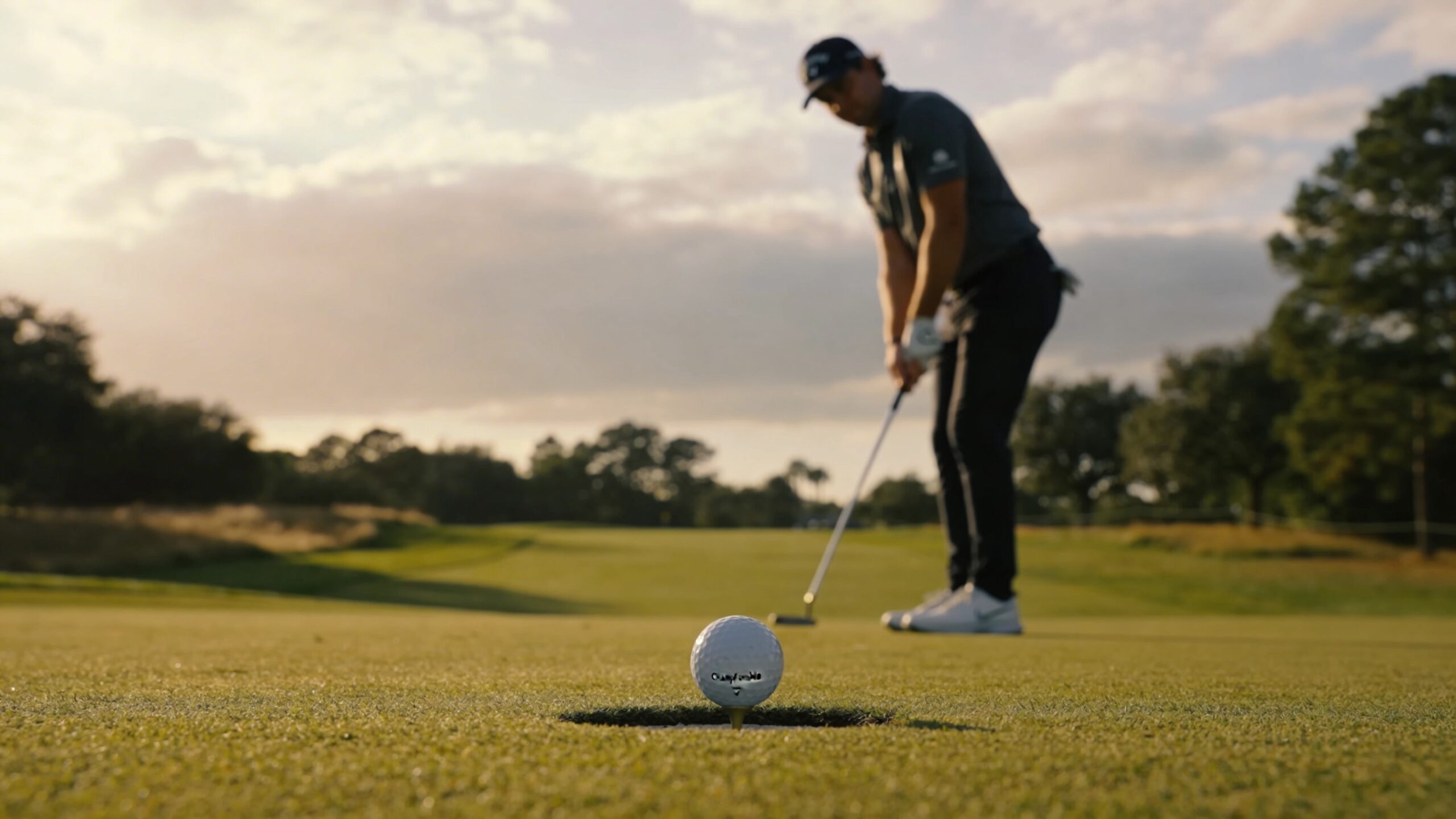
Golf is often described as a physical game played with clubs and a ball, but those who compete at the highest levels understand a deeper truth: golf is a psychological battleground. Long before the swing begins, the mind has already influenced the outcome. The psychology of golf is not just about staying positive or calming nerves. It is about training attention, managing emotion, mastering self-talk, and sustaining focus over hours of competition. When we study how tour professionals focus like pros, we find a pattern. Their mental approach is deliberate, structured, and practiced just like their mechanics. They do not rely on motivation alone. They build systems for focus. They create routines that protect concentration. They train their thoughts the way they train their swings. For amateur golfers searching for consistency, understanding the psychology of golf can unlock dramatic improvement. Focus is not a personality trait reserved for elite athletes. It is a skill that can be developed. The ability to concentrate deeply on the present shot, ignore distractions, and respond calmly to adversity separates the weekend golfer from the champion. Mastering the mental side of golf does not eliminate mistakes. It transforms how you respond to them. And in a sport defined by patience and precision, that response often determines your score.
A: Usually the target and ball flight. Mechanics are tuned in practice, not during performance.
A: Slow your breathing, pick a small target, and follow your routine like it’s a script.
A: Do a short review (one lesson), then use a reset trigger and move to the next task.
A: Limit score checks to planned moments and redirect attention to routine steps and target selection.
A: Ideally one cue word—or none. Let the picture and routine run the swing.
A: Stress speeds time perception. Add a breath and a final target look to slow the moment down.
A: Acknowledge the danger, pick the safe side, and replace the image with a positive target and flight.
A: Focus in bursts: decision → routine → swing, then relax fully while walking to the next shot.
A: Calm, specific, and short—like a caddie: “Start line,” “Smooth,” “Commit.”
A: Confidence comes from commitment and routine—putts drop more often when you trust your process.
Attention Control: The Foundation of Elite Focus
At its core, focus in golf is the ability to control attention. Tour professionals understand that attention is limited. It can be directed toward useful information, such as wind direction and target alignment, or wasted on distractions like previous mistakes and future worries.
Elite players practice narrowing their focus to the present shot. They are aware of the leaderboard, the crowd, and the stakes, but they do not let those factors dominate their thinking. Instead, they shift attention to controllable variables: the target, the feel of the swing, and the execution of their routine.
Psychologists refer to this as attentional flexibility. The best golfers know when to widen their awareness to evaluate strategy and when to narrow it to execute a shot. Before stepping into the ball, they take in environmental information. Once they commit, their focus tightens like a laser beam.
This disciplined shift between broad and narrow focus prevents mental overload. Rather than juggling multiple thoughts mid-swing, they simplify their mental cues. Often, it comes down to one clear intention: send the ball to a specific target with full commitment.
By training attention deliberately, professionals avoid the scattered thinking that plagues many amateur golfers. The mind becomes an ally instead of an obstacle.
The Power of the Pre-Shot Routine
One of the most visible psychological tools in golf is the pre-shot routine. To the casual observer, it may appear repetitive or ritualistic. In reality, it is a powerful focus anchor.
A consistent pre-shot routine reduces anxiety and enhances concentration. By following the same sequence before every shot, golfers create familiarity. Familiarity breeds confidence. The routine becomes a mental trigger that signals to the brain: it is time to perform.
Professionals typically begin by evaluating the shot, selecting a clear target, visualizing the ball flight, and taking a rehearsal swing. Once they step into the address position, they minimize delay. This prevents doubt from creeping in.
The routine serves multiple psychological functions. It blocks out distractions by occupying the mind with purposeful steps. It reinforces commitment by clarifying intention. It also stabilizes emotions. When pressure rises, the routine remains constant.
For amateur players, building a reliable pre-shot routine can transform performance. It shifts attention from fear of outcome to the process of execution. In the psychology of golf, process orientation is everything.
Managing Pressure and Performance Anxiety
Few sports create tension like golf. Unlike fast-paced team games, golf offers long stretches of quiet anticipation. The silence amplifies self-awareness. Under pressure, the mind can become its own worst critic.
Tour professionals do not eliminate nerves. They learn to manage them. One key principle is reframing anxiety as excitement. Physiologically, both states produce similar bodily responses: increased heart rate, heightened alertness, and adrenaline release. The difference lies in interpretation.
When a player views a racing heart as a threat, tension increases. When it is interpreted as readiness, performance improves. Professionals train themselves to welcome the feeling of competition. They associate it with opportunity rather than danger.
Breathing techniques also play a central role. Slow, controlled breaths regulate the nervous system. Many elite golfers take a deliberate breath before beginning their routine, signaling calm and focus.
Perhaps most importantly, professionals accept that pressure is part of the game. They do not expect to feel perfectly relaxed in critical moments. Instead, they trust their preparation. Confidence in preparation reduces fear of failure.
Understanding this psychological approach allows everyday golfers to handle high-stakes situations more effectively. The final hole of a club championship becomes less intimidating when you have trained your response to pressure.
Self-Talk: The Conversation That Shapes Confidence
Every golfer has an internal dialogue. The question is whether it helps or harms performance. The psychology of golf places enormous emphasis on self-talk because thoughts influence emotion, and emotion influences action.
Tour professionals are acutely aware of their internal language. After a poor shot, they resist harsh criticism. Instead of saying, “I always mess this up,” they might think, “Commit to the next one.” This subtle shift maintains confidence.
Constructive self-talk is realistic, not delusional. It acknowledges mistakes without attaching identity to them. A bad shot becomes a temporary event, not a permanent flaw.
Many professionals use cue words to reinforce focus. Simple phrases like “smooth tempo” or “strong finish” guide attention toward execution rather than outcome. These words are short, specific, and repeatable.
Negative self-talk often stems from outcome fixation. When golfers focus excessively on score, they judge each shot harshly. Professionals counteract this by emphasizing controllable behaviors. They evaluate effort and commitment more than immediate results.
Developing disciplined self-talk requires awareness. Golfers must notice when their inner dialogue turns destructive. Replacing critical thoughts with performance-oriented cues strengthens resilience over time.
Emotional Resilience After Mistakes
Mistakes are inevitable in golf. Even the best players in the world miss fairways, hit into bunkers, and three-putt. What distinguishes them is how quickly they recover emotionally.
Psychological resilience is the ability to reset. After a poor shot, professionals allow themselves a brief emotional reaction. Suppressing frustration entirely is unrealistic. However, they limit its duration.
Many use a physical trigger to signal the end of rumination. It might be placing the club back in the bag or stepping across a specific boundary line. This symbolic act tells the brain that the previous shot is complete.
The focus then shifts forward. Instead of replaying the mistake, attention moves to the next opportunity. This forward-looking mindset prevents compound errors.
Resilience also stems from perspective. Professionals recognize that one shot rarely defines a tournament. By maintaining a long-term view, they avoid overreacting to short-term setbacks.
Amateur golfers often allow one mistake to derail an entire round. Learning to compartmentalize errors is a crucial step toward focusing like a pro.
Visualization and Mental Rehearsal
Visualization is a cornerstone of golf psychology. Before executing a shot, professionals mentally rehearse success. They see the ball flying along a precise trajectory and landing on a specific target.
This mental imagery activates neural pathways associated with movement. The brain prepares for the action before the body performs it. Visualization enhances confidence because the shot feels familiar.
The key to effective visualization is detail. Elite golfers imagine not just the flight but the sound of impact and the feeling of balance at finish. The more vivid the image, the stronger its effect.
Visualization also plays a role in preparation. Players mentally rehearse challenging scenarios in advance, such as hitting a tight fairway under pressure. When those moments arise in competition, they feel less intimidating.
For golfers seeking improvement, integrating visualization into practice sessions can significantly enhance focus. It bridges the gap between intention and execution.
Sustaining Focus for Eighteen Holes and Beyond
Golf demands prolonged concentration. A typical round lasts four to five hours. Sustaining focus for that duration requires strategy.
Professionals understand the importance of mental energy management. They do not maintain peak intensity every second. Instead, they conserve focus between shots and ramp it up during critical moments.
Between shots, many players engage in light conversation or neutral thoughts. This prevents mental fatigue. When it is time to play, they switch back into performance mode.
Nutrition, hydration, and physical conditioning also influence psychological stamina. Fatigue weakens concentration. Tour professionals treat their bodies as part of their mental game.
Equally important is post-round reflection. Professionals review performance objectively, identifying lessons without dwelling on mistakes. This continuous learning cycle strengthens mental skills over time.
Sustained focus is not about constant tension. It is about intentional engagement when it matters most.
Mastering the Mind to Master the Game
The psychology of golf reveals a powerful truth: the mind is both the greatest challenge and the greatest advantage in the sport. Focusing like a pro requires deliberate training of attention, emotion, self-talk, and resilience. Tour professionals do not rely on talent alone. They cultivate mental discipline through routines, visualization, and perspective. They accept pressure, recover quickly from mistakes, and sustain concentration over long rounds. For golfers at any level, the path to improvement runs through the mind as much as the swing. Developing psychological skills does not require a tour card. It requires intention and practice. The next time you step onto the course, remember that every shot begins in thought. Train those thoughts carefully. Direct your focus deliberately. Manage your emotions constructively. When you learn to master the mental side of golf, you gain an edge that no equipment upgrade can provide. And in a game defined by subtle differences, that edge can transform not only your scorecard but your entire experience on the course.